BERKELEY SCHOOL OF BUSINESS, ARTS & SCIENCES

ACCA – Association of Chartered Certified Accountants

ACCA | Association of Chartered Certified Accountants is a globally recognized qualification for aspiring finance and accounting professionals. The ACCA program develops strong expertise in financial management, auditing, taxation, and reporting while ensuring compliance with international standards. Pursuing ACCA opens career opportunities worldwide, equipping students with advanced knowledge, practical skills, and credibility to excel in accounting and finance roles.

Overview

The ACCA certification (Association of Chartered Certified Accountants) is a globally recognized qualification that equips professionals with the skills and knowledge needed for a successful career in accounting, finance, and business management. This certification covers a wide range of topics, including financial reporting, management accounting, taxation, auditing, and business strategy. The ACCA qualification offers several benefits, including enhanced career prospects, global mobility, and increased earning potential. It is highly valued by employers worldwide, providing individuals with the credibility and expertise needed to excel in both public and corporate sectors. Additionally, ACCA-certified professionals have access to continuous professional development and a strong network of peers, helping them stay competitive in a dynamic job market.

Offered by

ACCA (Association of Chartered Certified Accountants)

Head office

The head office is located in London, UK.

Members

As of 2024, ACCA (Association of Chartered Certified Accountants) has approximately 250,000 members globally.

Vision & Mission

The vision of ACCA is to be a global leader in developing professional accountants who drive business success and ethical responsibility. Its mission focuses on providing opportunities to individuals of ability, creating a diverse and inclusive profession, and delivering qualifications that uphold high ethical, professional, and governance standards while contributing positively to society and the global economy.

WHAT IS THE ELIGIBILITY

Since there are no precise qualifications, anyone can generally enroll in FIA and ACCA. However, there are requirements based on diverse histories of individuals.
• For ACCA, the minimum age requirement is typically over 21, or 16 if applying through the FIA route.
• Five subjects totaling two A levels, three GCSEs, or the equivalent, including English and mathematics.
• Professional degrees including the MBA, M.Sc., M.Com., and CMA, CPA, and CIMA may be exempt from exams ranging from 3 to 9 papers. Exemptions may also be available for degrees that are somewhat pertinent.

Who can do?
anyone who is interested to learn about following concepts can pursue ACCA – Association of Chartered Certified Accountants:
Business and Technology (BT), Management Accounting (MA), Financial Accounting (FA), Corporate and Business Law (LW), Performance Management (PM), Taxation (TX), Financial Reporting (FR):, Audit and Assurance (AA), Financial Management (FM), Strategic Business Leader (SBL), Advanced Financial Management (AFM), Advanced Performance Management (APM), Advanced Taxation (ATX), Advanced Audit and Assurance (AAA).
individuals with the following designations:
Chartered Certified Accountant (ACCA), Financial Controller, Audit Manager, Tax Consultant, Accountants, Finance professionals, Business managers, Financial analysts, Chief Financial Officer (CFO), Management Accountant, Tax Consultant/Advisor, Corporate Treasurer, Financial Controller, Forensic Accountant, Risk Manager, Business Consultant.

Course structure

Level 1: Applied Knowledge

Covers key subjects like Accountant in Business (AB), Management Accounting (MA), and Financial Accounting (FA). These courses provide a solid foundation in business operations, management decision-making, and financial reporting, equipping students with essential skills for a successful career in accounting and finance.

Level 2: Applied Skills

Offers comprehensive coverage of subjects like Corporate and Business Law (LW), Performance Management (PM), Taxation (TX), Financial Reporting (FR), Audit and Assurance (AA), and Financial Management (FM). These courses enhance expertise in legal frameworks, performance analysis, tax systems, financial reporting, auditing, and strategic financial management, preparing students for advanced roles in accounting and finance.

Level 3: Strategic Professional (Core Papers)

Focuses on Strategic Business Leader (SBL) and Strategic Business Reporting (SBR), equipping students with leadership, strategic decision-making, and advanced financial reporting skills. These subjects prepare candidates to handle complex business challenges, ensuring they can lead and report effectively in dynamic corporate environments.

Level 3: Strategic Professional (Optional Papers)

Includes Advanced Financial Management (AFM), Advanced Performance Management (APM), Advanced Taxation (ATX), and Advanced Audit and Assurance (AAA). These advanced subjects deepen expertise in financial strategy, performance evaluation, complex taxation issues, and audit practices, preparing students for high-level roles in finance, management, and auditing.

Lecture plan

Session 1: Applied Knowledge

Business and Technology (BT)

Management Accounting (MA)

Financial Accounting (FA)

Session 2: Applied Skills

Corporate and Business Law (LW*)

Performance Management (PM)

Taxation (TX)

Financial Reporting (FR)

Audit and Assurance (AA)

Financial Management (FM)

Learning methodology

Berkeley offers expertly developed learning materials tailored to meet participants' needs, ensuring comprehensive coverage of the syllabus and optimal exam preparation.

‣ Tailored Material: Guides are designed to cover the entire syllabus, offering full preparation and deep understanding.

‣ In-Depth Content: Unlike superficial outlines, our materials provide fully developed theories and concepts, equipping participants with complete knowledge.

‣ Strategic Study: We help participants prioritize study time by indicating the weight of each topic, allowing efficient focus on crucial areas.

‣ Difficulty Levels: Topics are labeled as "Awareness" or "Proficiency," guiding participants to allocate time based on the required depth of knowledge.

‣ Comprehensive Coverage: Our materials include detailed theory and a glossary of technical terms to clarify complex concepts.

‣ Effective Learning Techniques: Visual aids and memorization techniques ensure long-lasting retention, helping candidates succeed.

Berkeley’s methodologies equip participants with the essential knowledge and tools for both exams and future success.

Lecture Image
Lectures

Our lecture plan integrates structured learning with interactive teaching methods, promoting engagement and collaboration. This approach ensures a comprehensive understanding of concepts, fostering critical thinking and practical application in real-world scenarios

Practice session

Practice sessions offer hands-on experience through guided exercises, enhancing skills and reinforcing knowledge. This practical approach ensures mastery of concepts, promoting confidence and competence in real-world applications

Mock examination

Mock examinations simulate real test conditions, providing valuable practice and assessment. This helps identify strengths and weaknesses, ensuring thorough preparation and boosting confidence for actual exams

What are the Exam Information?

Exam Format & Duration
Part/Module Exam format Exam duration
Level 1: Applied Knowledge
  • Mode: Computer-Based Exams (CBE)
  • Number of Questions: BT, MA, FA: Typically 40-50 Objective Test Questions (OTQs), which include MCQs, True/False, and Multiple Answer Questions (MAQs).

2 hours per paper

Level 2: Applied Skills
  • Mode: Computer-Based Exams (CBE) for most papers.
  • Number of Questions:
    • Section A: 20-25 Objective Test Questions (OTQs), which include MCQs, Multiple Answer Questions (MAQs), and other types of objective questions.
    • Section B: Typically 3-4 Constructed Response Questions (CRQs), which require written answers and calculations.

3 hours per paper

Level 3: Strategic Professional (Core Papers)
  • Mode: Paper-based exams (mostly), but SBL can be taken as a CBE.
  • Number of Questions:
    • SBL: One case study with several questions that require written and numerical responses.
    • SBR: Typically 2-3 major questions assessing the application of IFRS and accounting principles.

3 hours per paper

Level 3: Strategic Professional (Optional Papers)
  • Mode: Paper-based exams
  • Number of Questions: Typically 2-3 case study questions that require detailed analysis and written explanations.

3 hours per paper

Exam Dates

Exams are held four times a year (March, June, September, and December).

Passing Criteria

Typically 50% for most papers (varies slightly depending on the exam and its difficulty).

Exam Locations

ACCA's exams are conducted at Pearson VUE centers. The computer-based exam (CBE) is administered at secure test administration sites managed by Pearson VUE.

Success Stories

“As a strong advocate for education and human development, I commend Berkeley for its exceptional commitment to empowering future leaders. The institution stands as a symbol of excellence, innovation, and opportunity. Students who walk its halls are nurtured with knowledge, values, and vision—qualities that contribute to building a stronger and more prosperous future for our nation.”- H.H. Shaikh Khalifa Al Hamid

Visit our Alumni

Alumni Benefits

‣ Exclusive Networking Events: Access invitations to industry-leading events and thought-leadership gatherings featuring renowned speakers.


‣ Monthly Updates: Stay informed with a newsletter highlighting the latest research, events, and activities from the school.


‣ LinkedIn Community Access: Join the Executive Education LinkedIn group for networking and professional development opportunities.


‣ Educational Discounts: Enjoy a 20% discount on open-enrollment programs and access to workshops focused on emerging trends.


‣ Global Alumni Network: Connect with a diverse alumni community through the Berkeley School’s online network and engage in country and interest groups.

Is It Worth the Investment?

Summary of ACCA-qualified salary estimates across various regions, based on average annual salaries:


United Kingdom (UK)

Entry-Level: £30,000 - £40,000 | Senior-Level: £70,000 - £100,000+

United States (USA)

Entry-Level: $55,000 - $65,000 | Senior-Level: $100,000 - $150,000+

Canada

Entry-Level: CAD 50,000 - CAD 60,000 | Senior-Level: CAD 85,000 - CAD 120,000+

United Arab Emirates (UAE)

Entry-Level: $40,000 - $55,000 | Senior-Level: $100,000 - $150,000+

Saudi Arabia (KSA)

Entry-Level: $35,000 - $50,000 | Senior-Level: $90,000 - $120,000+

What you earn

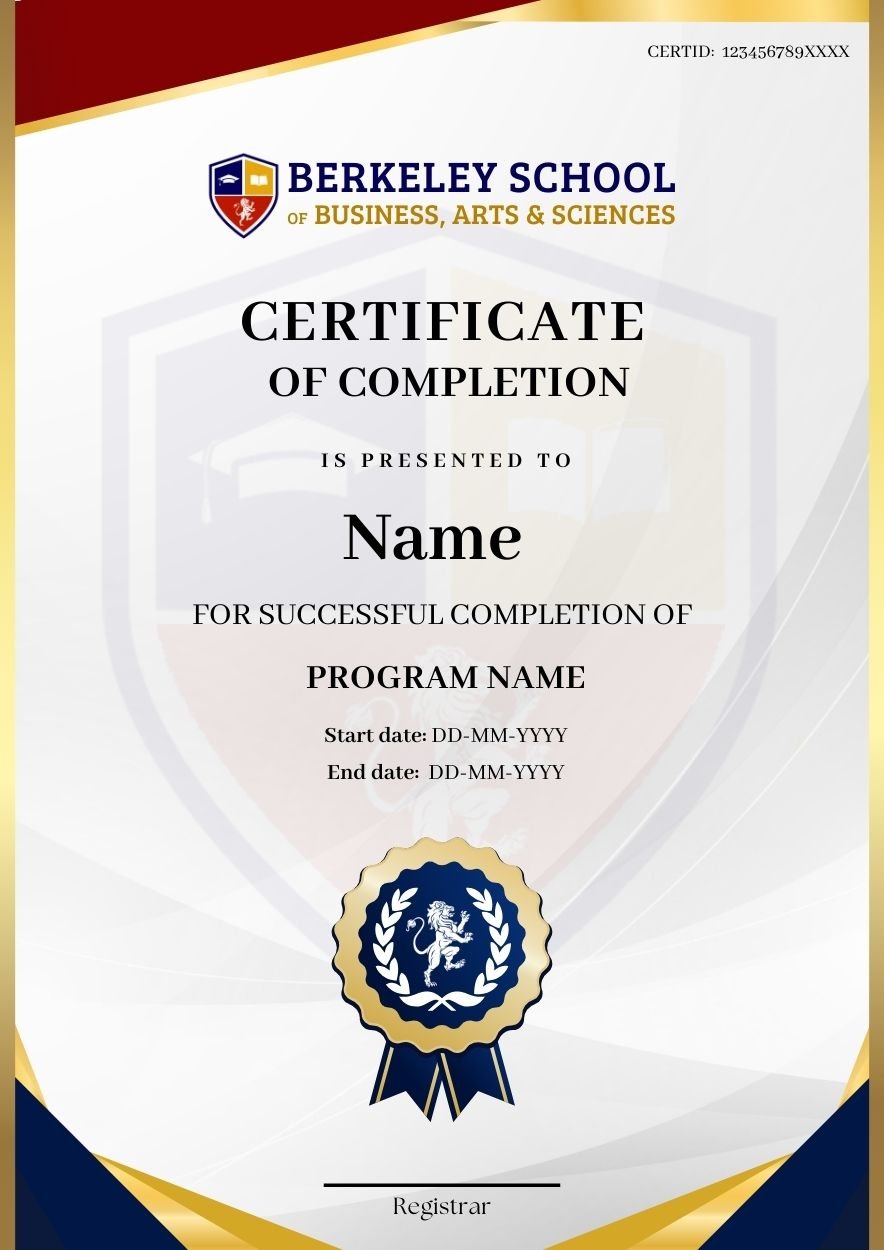
You will get a certificate of completion, which is highly reputed and accepted by employers.

Global Recognition

Obtain a qualification recognized and respected worldwide, enhancing your career opportunities across various countries.

Career Advancement

Access diverse career paths in accounting, finance, and management, with opportunities for senior and specialized roles.

Comprehensive Curriculum

Benefit from a broad and detailed curriculum covering key areas of accounting, finance, and business management.

Professional Development

Engage in continuous learning and professional development through ACCA’s resources and global network.

Ethical Standards

Adhere to high ethical standards and best practices, ensuring integrity and professionalism in your work.

Related courses

CIMA - Chartered Institute of Management Accountants

The CIMA qualification is a globally recognized certification in management accounting, focusing on business strategy, performance management, and financial decision-making.

Read More
CIMA Fast-Track - Chartered Institute of Management Accountants

Under the CIMA fast-track (exemption of 15 examinations out of a total of 16 examinations, depending on the candidate’s profile), candidates will sit only for the last case study exam of the CIMA qualification.

Read More
CFA – Chartered Financial Analyst (Level 1, Level 2 and Level 3)

Chartered Financial Analyst (CFA) certification is a globally recognized credential awarded by the CFA Institute, designed for finance and investment professionals aspiring to excel in areas such as portfolio management, investment analysis, and wealth management.

Read More
CAIA - Chartered Alternative Investment Analyst

The CAIA (Chartered Alternative Investment Analyst) designation is a leading certification for alternative investment professionals. It covers hedge funds, private equity, and more, symbolizing expertise in complex investment strategies.

Read More

FAQ: ACCA – Association of Chartered Certified Accountants

contact us for more information or to apply for admission. Seats fill up quickly, so we encourage early registration!

Cart

Cart (0)