The Fundamentals of Alternative Investments program, offered by the CAIA Association, provides a comprehensive introduction to alternative asset classes. It equips learners with foundational knowledge of private equity, real assets, hedge funds, private debt, and digital assets, making it ideal for individuals seeking entry-level understanding of alternative investments.
The CAIA Association – Fundamentals of Alternative Investments program is structured to develop practical awareness of alternative investment markets and their application within diversified portfolios. The curriculum emphasizes industry-relevant terminology, core asset class characteristics, and the economic rationale behind alternative investments, enabling participants to interpret and engage with alternatives-related discussions in professional settings.
The CAIA Association offers the Fundamentals of Alternative Investments program as a foundation-level educational course designed to build essential knowledge of alternative asset classes and investment structures.
The head office of the CAIA Association is located in Amherst, Massachusetts, United States.
With more than 13,000 members globally, the CAIA Association represents a worldwide community of professionals involved in alternative investments across asset management, banking, consulting, and institutional investing.
The CAIA Association aims to advance foundational understanding of alternative investments through accessible, high-quality education. The mission of the Fundamentals of Alternative Investments program is to equip learners with essential knowledge of alternative asset classes, their role in portfolios, and their practical application, while promoting industry awareness, ethical standards, and informed decision-making across the global investment community.
The CAIA Association Fundamentals of Alternative Investments program has no formal eligibility requirements.
The program is open to:
Eight online modules across three categories, with approximately 15 hours of learning.
Introduces the defining characteristics, principal strategies and market relevance of alternative investments. Learners examine their role within diversified portfolios and the implications of illiquidity.
Defining Alternative Investments
Major Alternative Investment Strategies
Role in Diversified Portfolios
Illiquidity and Investor Considerations
Explores how alternative investments can be grouped according to common risk and return drivers. The module also introduces performance measurement and appropriate benchmarking methods.
Common Risk and Return Drivers
Alternative Investment Risk Characteristics
Performance Measurement
Benchmarking Alternative Investments
Examines the structures through which investors access alternative investments. It introduces essential concepts such as net asset value, the J-curve, accredited investors and qualified purchasers.
Fund Vehicle Concepts and Terminology
Illiquid Investment Structures
Semi-Liquid and Liquid Structures
Vehicle Selection and Client Suitability
Introduces alternative strategies investing primarily in public or private equity securities. Learners consider their characteristics, objectives, risks, performance and potential portfolio applications.
Public and Private Equity Strategies
Market Development and Current Relevance
Strategy Characteristics, Risks and Performance
Portfolio Integration and Client Suitability
Explores alternative credit investments and their role in generating income and portfolio returns. It considers the development, characteristics, risks and performance of different credit strategies.
Alternative Credit Strategy Landscape
Credit Objectives and Return Drivers
Credit Risks and Performance Evaluation
Portfolio Integration and Client Suitability
Introduces alternative investments backed by physical or tangible assets. Learners examine their market relevance, distinctive risks, performance characteristics and contribution to diversified portfolios.
Real Assets Strategy Landscape
Income and Inflation Protection Objectives
Strategy Characteristics, Risks and Performance
Portfolio Integration and Client Suitability
Examines alternative strategies with flexible mandates or exposure to multiple asset classes. The module considers how these strategies may enhance diversification and manage portfolio risk.
Flexible-Mandate Strategies
Multi-Asset Diversifying Strategies
Strategy Characteristics, Risks and Performance
Portfolio Integration and Client Suitability
Focuses on allocating and implementing alternative investments within institutional and wealth-management portfolios using a goals-based investment approach.
Goals-Based Investment Philosophy
Asset Allocation and Portfolio Construction
Liquidity and Operational Management
Client Communication and Portfolio Monitoring
The Fundamentals of Alternative Investments program, offered by the CAIA Association, follows a structured, self-paced learning methodology designed to build foundational understanding of alternative investments. The program emphasizes conceptual clarity, practical awareness, and real-world context rather than advanced quantitative modeling or exam-centric preparation.
Learning materials are delivered through an interactive digital platform and are developed by industry practitioners to ensure relevance and accessibility. The methodology supports progressive learning, allowing participants to explore alternative asset classes, portfolio applications, and key investment principles at a manageable pace.
The program includes on-demand video lectures and reading materials that introduce core concepts in alternative investments. Content is presented in a clear and structured format, enabling learners to grasp key ideas related to asset classes, risk-return characteristics, and portfolio roles. Lectures are designed to support flexible learning and can be accessed at any time.
Practice sessions reinforce learning through guided exercises, short quizzes, and scenario-based examples. These activities help participants apply concepts, test understanding, and build confidence in interpreting alternative investment strategies and terminology within practical, real-world contexts.
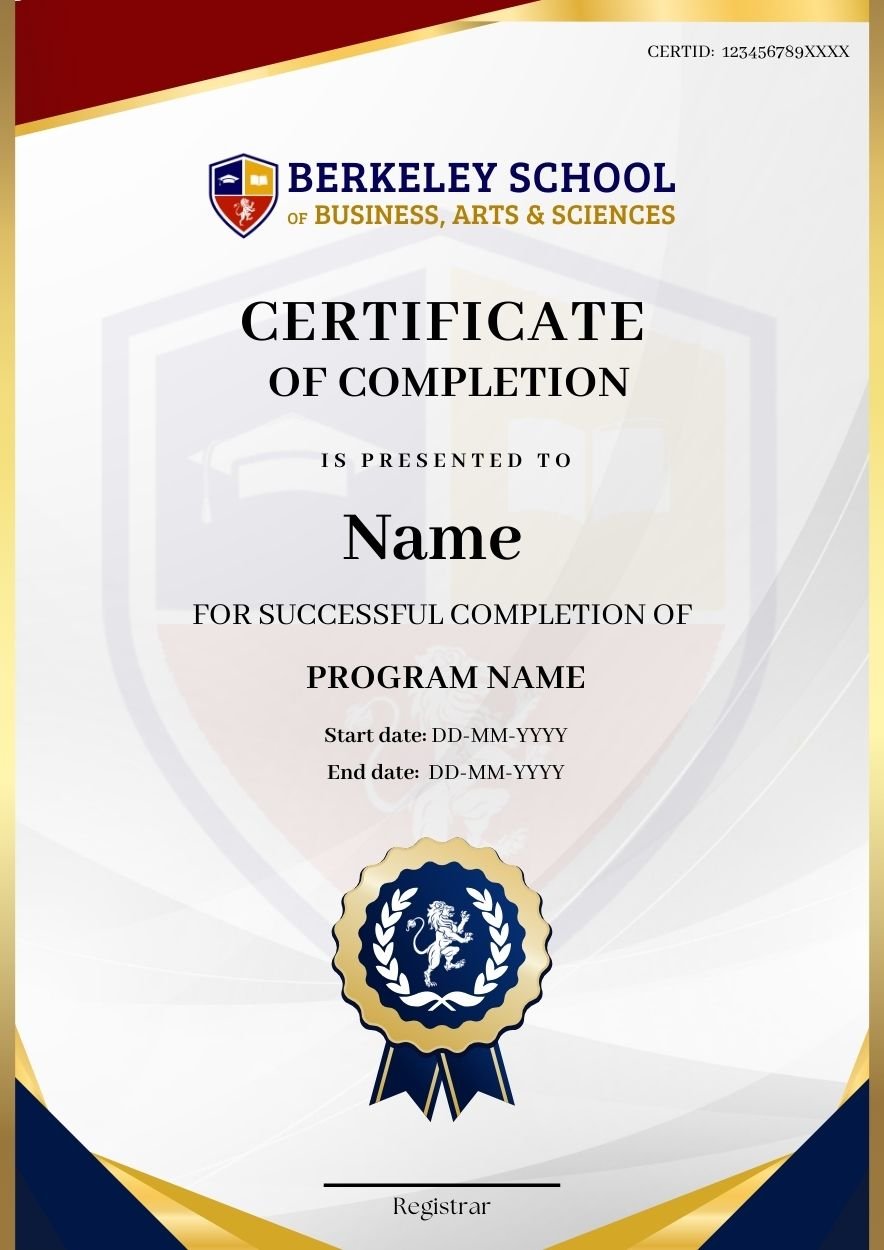
The program includes a structured knowledge assessment aligned with the curriculum objectives. This assessment evaluates participants’ understanding of foundational concepts and serves as a validation of learning outcomes. Successful completion of the assessment leads to the award of a certificate of completion and a digital badge.
The Fundamentals of Alternative Investments program, offered by the CAIA Association, follows defined performance standards to ensure the quality, relevance, and effectiveness of its educational content and learning experience.
Program performance and quality are evaluated through the following indicators:
* Computer-Based Exams
Exam cycles occur in the following months.
The score of 70% or higher to pass
All CAIA exams are administered at Prometric Test Centers. However, an Online Proctored exam may be requested via an accommodation only
“As a strong advocate for education and human development, I commend Berkeley for its exceptional commitment to empowering future leaders. The institution stands as a symbol of excellence, innovation, and opportunity. Students who walk its halls are nurtured with knowledge, values, and vision—qualities that contribute to building a stronger and more prosperous future for our nation.”- H.H. Shaikh Khalifa Al Hamid
Alumni Benefits
‣ Exclusive Networking Events: Access invitations to industry-leading events and thought-leadership gatherings featuring renowned speakers.
‣ Monthly Updates: Stay informed with a newsletter highlighting the latest research, events, and activities from the school.
‣ LinkedIn Community Access: Join the Executive Education LinkedIn group for networking and professional development opportunities.
‣ Educational Discounts: Enjoy a 20% discount on open-enrollment programs and access to workshops focused on emerging trends.
‣ Global Alumni Network: Connect with a diverse alumni community through the Berkeley School’s online network and engage in country and interest groups.
The Fundamentals of Alternative Investments program, offered by the CAIA Association, supports career development by building essential literacy in alternative investments rather than by directly qualifying participants for senior investment roles or compensation outcomes.
This foundational certificate is designed to enhance professional awareness, strengthen industry understanding, and support career progression in roles where exposure to alternative investments is beneficial.
Important Note:
This program awards a certificate of completion and does not guarantee specific job titles, promotions, or salary outcomes. Compensation and senior role eligibility depend on factors such as experience, employer requirements, and additional professional qualifications.
You will get a certificate of completion, which is highly reputed and accepted by employers.