The CPA (Certified Public Accountant) USA designation, granted by AICPA, is a top certification for accounting professionals. It covers auditing, taxation, and financial reporting.
The Certified Public Accountant (CPA) credential in the United States is widely acknowledged as the most prominent accounting certification globally. It is a demanding yet gratifying qualification that can unlock many career prospects. Whether you are commencing your accounting profession or seeking to enhance your current expertise, obtaining a CPA certification can facilitate the realization of your aspirations.
AICPA (American Institute of Certified Public Accountants, USA), is the world’s largest member association representing the accounting profession.
New York City, New York.
The American Institute of Certified Public Accountants (AICPA) currently represents around 597,000 members worldwide. This membership consists of Certified Public Accountants (CPAs) working across diverse areas, including public practice, business, industry, government, and academia.
The vision of the American Institute of Certified Public Accountants (AICPA) is to empower global professionals and businesses by delivering relevant knowledge, resources, and advocacy in accounting and finance. Its mission is to support and advance the CPA profession through education, training, and advocacy, ensuring integrity in financial reporting, serving the public interest, and guiding members in a rapidly evolving business landscape.
• Every state has its own criterion but in general, it requires at least a minimum of a Bachelor’s degree 4 years with Business and Finance Course and Accounting Training Course ( Subjects in Accounting, Finance, Tax, & Business)
• 3 years B.Com has bright chances if taxation and audit are studied.
Note: This is a common misconception that you need 120 credit hours. Some States require 24 accounting & 24 business hours and some States require less.
CPA (USA) consists of 3 core subjects and 1 Discipline subject of your choice.
It covers key areas such as auditing standards, which include a thorough understanding of Generally Accepted Auditing Standards (GAAS); audit planning and risk assessment, focusing on identifying and responding to risks; and internal controls, highlighting their significance in the audit process. Additionally, you will delve into evidence collection and documentation practices, learn to perform analytical procedures, and understand the various types of audit reports and communication protocols. The outline also incorporates sections on attestation engagements beyond traditional audits, ensuring that candidates are well-equipped for diverse scenarios in the auditing field.
It covers a wide range of topics, including financial statement preparation and reporting, which focuses on the balance sheet, income statement, and statement of cash flows. Additionally, the outline addresses accounting for assets, liabilities, and equity, incorporating both current and non-current classifications. Candidates will also explore financial reporting frameworks, such as GAAP and IFRS, and the requirements for governmental and not-for-profit accounting. The outline emphasizes understanding and applying relevant standards, ensuring that candidates are well-prepared to address complex financial reporting issues in practice.
It covers various areas, including individual taxation, which covers topics such as income, deductions, and credits, alongside corporate and partnership taxation, emphasizing the tax implications of business structures and transactions. Additionally, the outline addresses tax research and procedures, enabling candidates to understand the tax compliance process and apply relevant laws. The regulation component includes an exploration of business law concepts, such as contracts, agency, and sales, ensuring candidates are well-versed in the legal frameworks affecting financial and business transactions.
It covers business analytics, where candidates learn to interpret financial information and utilize various analytical techniques to assess business performance. The outline also addresses reporting standards, emphasizing the importance of adhering to Generally Accepted Accounting Principles (GAAP) and International Financial Reporting Standards (IFRS) in financial reporting. Furthermore, candidates will explore budgeting and forecasting, understanding how to prepare and analyze budgets to guide business strategy.
It encompasses areas such as system design and implementation, where candidates learn about the processes for developing and maintaining information systems. The outline also covers information technology (IT) controls, including both general controls and application controls, which are essential for ensuring data integrity and security. Additionally, you will explore auditing information systems, focusing on how to evaluate the effectiveness of controls and assess risks associated with IT environments.
It covers a variety of topics, including individual taxation, which addresses income, deductions, and credits, as well as business taxation, focusing on the tax implications for various business entities such as corporations and partnerships. Candidates will also explore tax planning strategies, emphasizing the importance of effective planning to minimize tax liabilities while adhering to legal requirements. Furthermore, the outline discusses tax compliance processes, including filing requirements and deadlines, as well as the role of tax research in decision-making.
Berkeley offers expertly developed learning materials tailored to meet participants' needs, ensuring comprehensive coverage of the syllabus and optimal exam preparation.
Berkeley’s methodologies equip participants with the essential knowledge and tools for both exams and future success.
Our lecture plan integrates structured learning with interactive teaching methods, promoting engagement and collaboration. This approach ensures a comprehensive understanding of concepts, fostering critical thinking and practical application in real-world scenarios
Practice sessions offer hands-on experience through guided exercises, enhancing skills and reinforcing knowledge. This practical approach ensures mastery of concepts, promoting confidence and competence in real-world applications
Mock examinations simulate real test conditions, providing valuable practice and assessment. This helps identify strengths and weaknesses, ensuring thorough preparation and boosting confidence for actual exams
Evaluates and ensure the quality of the training program and all its deliverables. This is
measured through the following indicators:
‣ Instructors' experience and style in presenting and
explaining topics.
‣ Variety and balance of teaching methods (such as discussions, case studies,
mock exams and videos) used in the course to ensure retention and to match the learning
objectives.
‣ Level of interactivity.
‣ Feedback from program participants
‣ Full
compliance with Institute standards and guidelines for preparation and study requirements and
methodology.
‣ Progress reports from the training program provider.
* Computer-Based Exams
| Part/Module | Exam format | Exam duration |
|---|---|---|
|
Core 1: Auditing and Attestation (AUD)
|
MCQ: 78 (Score Weighting: 50%) and 7 Task Based Simulations (TBSs) (Score Weighting: 50%)
|
4 hours
|
|
Core 2: Financial Accounting and Reporting (FAR)
|
MCQ: 50 (Score Weighting: 50%) and 7 Task Based Simulations (TBSs) (Score Weighting: 50%)
|
4 hours
|
|
Core 3: Taxation and Regulation (REG)
|
MCQ: 72 (Score Weighting: 50%) and 8 Task Based Simulations (TBSs) (Score Weighting: 50%)
|
4 hours
|
|
Optional 1: Business Analysis and Reporting (BAR)
|
MCQ: 50 (Score Weighting: 50%) and 7 Task Based Simulations (TBSs) (Score Weighting: 50%)
|
4 hours
|
|
Optional 2: Information Systems and Controls (ISC)
|
MCQ: 82 (Score Weighting: 60%) and 6 Task Based Simulations (TBSs) (Score Weighting: 40%)
|
4 hours
|
|
Optional 3: Tax Compliance and Planning (TCP)
|
MCQ: 68 (Score Weighting: 50%) and 7 Task Based Simulations (TBSs) (Score Weighting: 50%)
|
4 hours
|
| Core Subjects (AUD, FAR, REG) | Optional/ Discipline Subjects (BAR, ISC, TCP) | |
| Jan 10 – Mar 26 | Jan 10 – Feb 6 | |
| Apr 1 – Jun 25 | Apr 20 – May 19 | |
| Jul 1 – Sep 25 | July 1 – 31 | |
| Oct 1 – Dec 26 | Oct 1 – 31 |
To pass each section of the CPA USA exam, you must score at least 75 on a scale of 0 to 99.
The CPA USA exam is available at select Prometric testing centers worldwide, providing convenience for international candidates who do not need to travel to the United States. Key international testing locations include:
The Most Economical Way to
A Great Value of Money
Learn at your own convenience
“As a strong advocate for education and human development, I commend Berkeley for its exceptional commitment to empowering future leaders. The institution stands as a symbol of excellence, innovation, and opportunity. Students who walk its halls are nurtured with knowledge, values, and vision—qualities that contribute to building a stronger and more prosperous future for our nation.”- H.H. Shaikh Khalifa Al Hamid
‣ Exclusive Networking Events: Access invitations to industry-leading events and thought-leadership gatherings featuring renowned speakers.
‣ Monthly Updates: Stay informed with a newsletter highlighting the latest research, events, and activities from the school.
‣ LinkedIn Community Access: Join the Executive Education LinkedIn group for networking and professional development opportunities.
‣ Educational Discounts: Enjoy a 20% discount on open-enrollment programs and access to workshops focused on emerging trends.
‣ Global Alumni Network: Connect with a diverse alumni community through the Berkeley School’s online network and engage in country and interest groups.
Globally, Certified Public Accountants (CPAs) typically earn significantly more than their non-certified counterparts, with variations based on region and experience. Here are key statistics:
United States: CPAs earn approximately 10-15% more than non-CPAs. Entry-level CPAs earn between $66,000 and $84,000, whereas non-CPAs in similar positions earn around $50,000 to $60,000.
Middle East: In countries such as the UAE and Saudi Arabia, CPAs can earn 15-25% more than non-certified accountants. For example, a CPA in Dubai may earn about AED 300,000 annually compared to AED 200,000 to 250,000 for non-CPAs.
Asia: In financial centers like Hong Kong and Singapore, CPAs earn between $80,000 and $120,000, while non-CPAs earn between $50,000 and $80,000. This reflects a 20-30% salary advantage for CPAs.
Europe: In the UK, CPAs generally earn around 15% more than their non-certified peers, with entry-level salaries ranging from $55,000 to $80,000, and experienced CPAs earning up to $110,000.
Australia: CPAs can earn between AUD 100,000 and 130,000 (approximately $65,000 to $84,000), with senior CPAs earning even higher salaries.
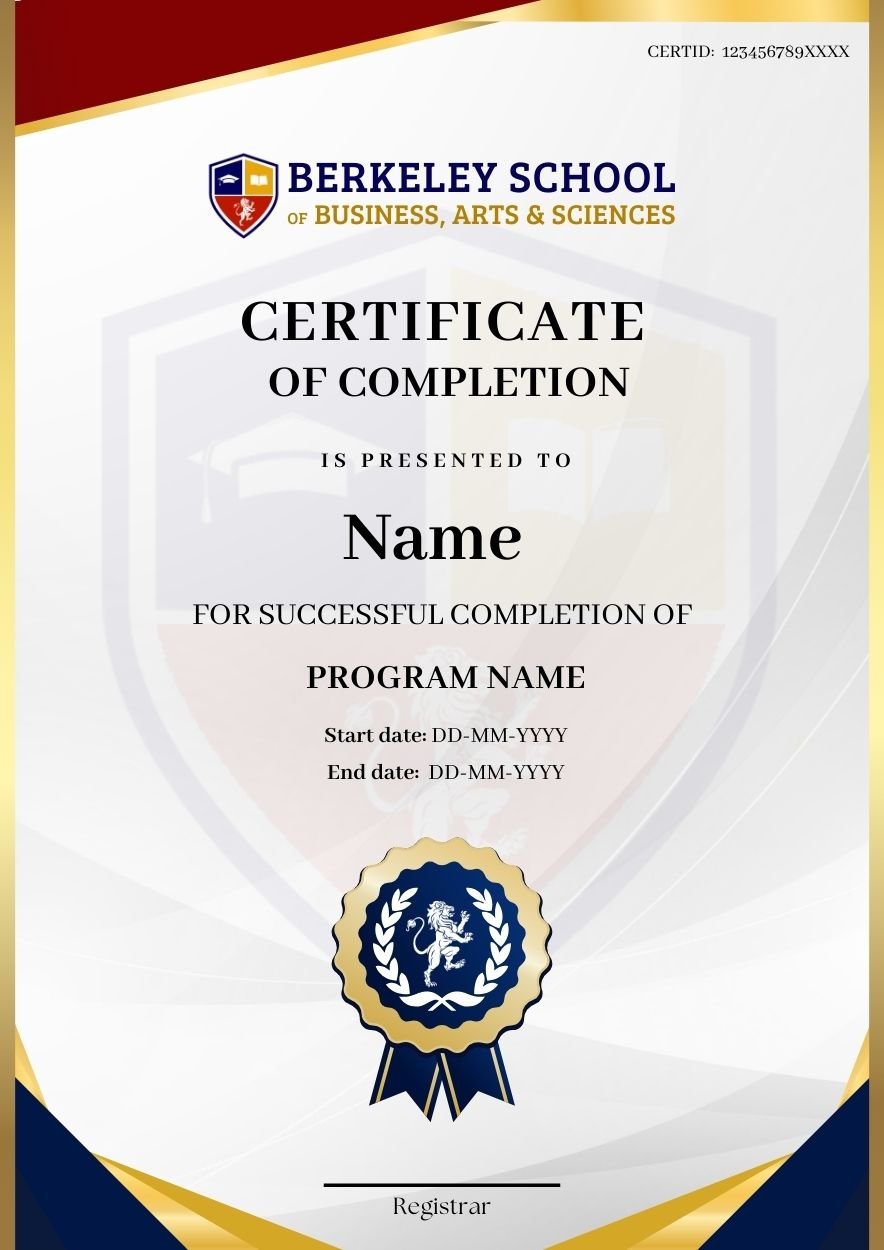
You will get a certificate of completion, which is highly reputed and accepted by employers.
Gain a highly respected credential recognized across the accounting profession and beyond.
Open doors to a wide range of accounting roles, including senior positions and specialized fields.
Acquire extensive knowledge in accounting, auditing, taxation, and business law.
Demonstrate adherence to industry standards and regulatory requirements, enhancing your professional credibility.
Access a broad network of professionals and resources to support career development and continuous learning.